
Holy Fire Ignites Faith as Thousands Unite in Jerusalem
SHARE
Every year, pilgrims from around the world converge on Jerusalem to witness one of Christianity’s most mesmerizing and ancient rites: the holy week Holy Fire ceremony. This tradition, observed in the Church of the Holy Sepulchre, marks a profound moment of Faith, symbolizing the resurrection of Jesus Christ and the triumph of light over darkness.
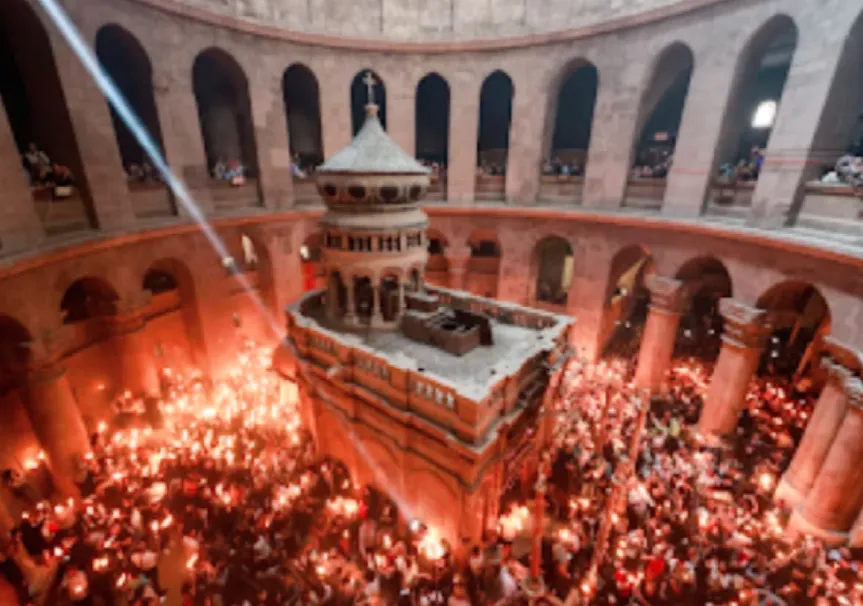
The Holy Fire ceremony takes place on Holy Saturday, the day before Orthodox Easter. Inside the dimly lit Church of the Holy Sepulchre, worshippers hold unlit candles as the anticipation grows. At the heart of the ritual is the Holy Edicule, the small shrine believed to enclose the tomb of Jesus. According to tradition, a miraculous flame appears within the tomb without the aid of any human lighting.
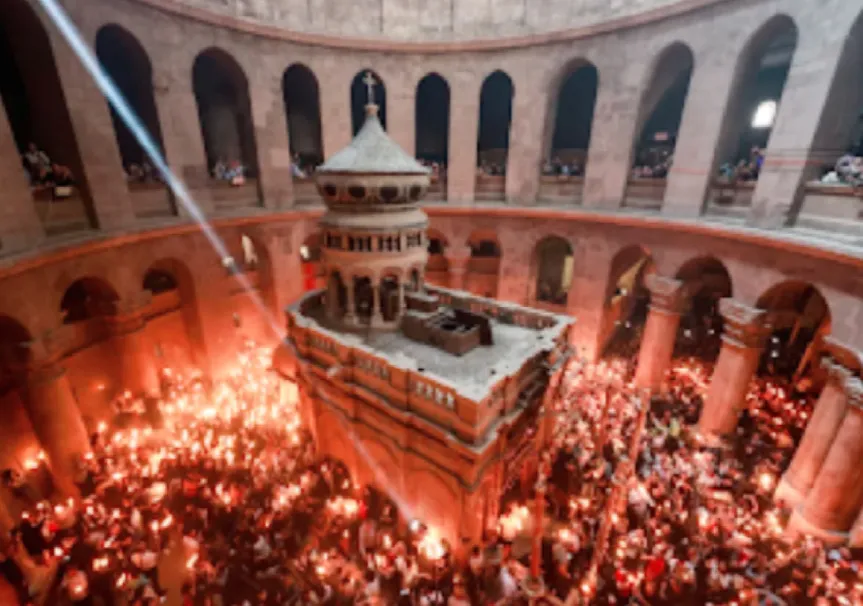
The Greek Orthodox Patriarch enters the Edicule and emerges holding the fire, which is then carefully passed from candle to candle among the faithful. By the time the ceremony concludes, the entire basilica glows with thousands of flickering lights, a visual testament to the enduring hope in Christ’s resurrection.
For centuries, this rite has been both a deeply spiritual and communal experience. Pilgrims see the flame as a tangible sign of God’s presence, echoing the Scripture: “For God, who said, ‘Let light shine out of darkness,’ has shone in our hearts to give the light of the knowledge of the glory of God in the face of Jesus Christ” (2 Corinthians 4:6). In this context, the fire is not merely a physical phenomenon but a reminder of the spiritual light Christ brings into the hearts of believers.
The ceremony is also a link between the modern faithful and generations of Christians who have come to this sacred site for over a millennium. Historical accounts suggest that the ritual has been observed for more than 1,200 years, drawing countless pilgrims eager to witness what Orthodox tradition calls the “Holy Fire.” This continuity reflects the enduring power of faith, even amid changing political and social landscapes.
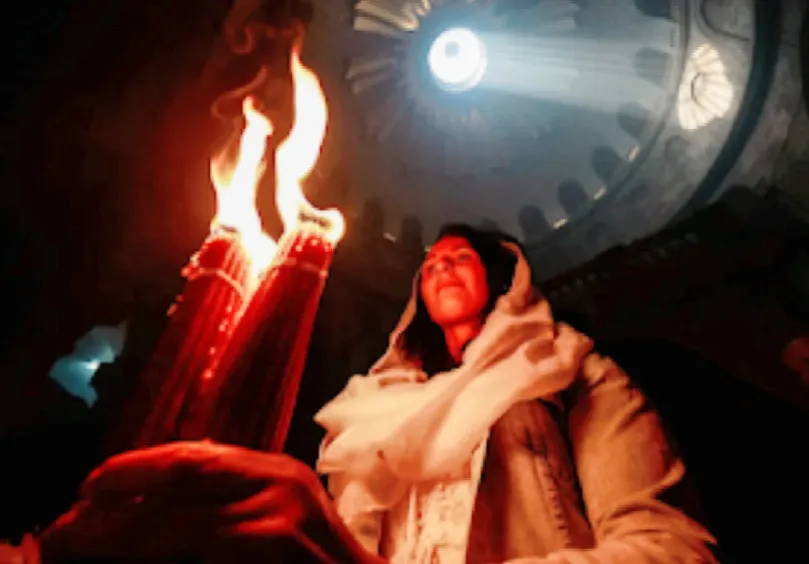
The passing of the flame often extends beyond the walls of Jerusalem. Pilgrims and clergy transport it to Orthodox communities around the world, sharing a spiritual connection that spans continents. The miracle of light becomes a shared experience, embodying the biblical call to “let your light shine before others, so that they may see your good works and give glory to your Father who is in heaven” (Matthew 5:16).
While skeptics have questioned the origin of the flame over the centuries, for believers, the focus remains on its spiritual significance. The Holy Fire serves as a reminder that Christ’s resurrection is central to the Christian faith, a victory over sin and death that continues to inspire devotion and awe.
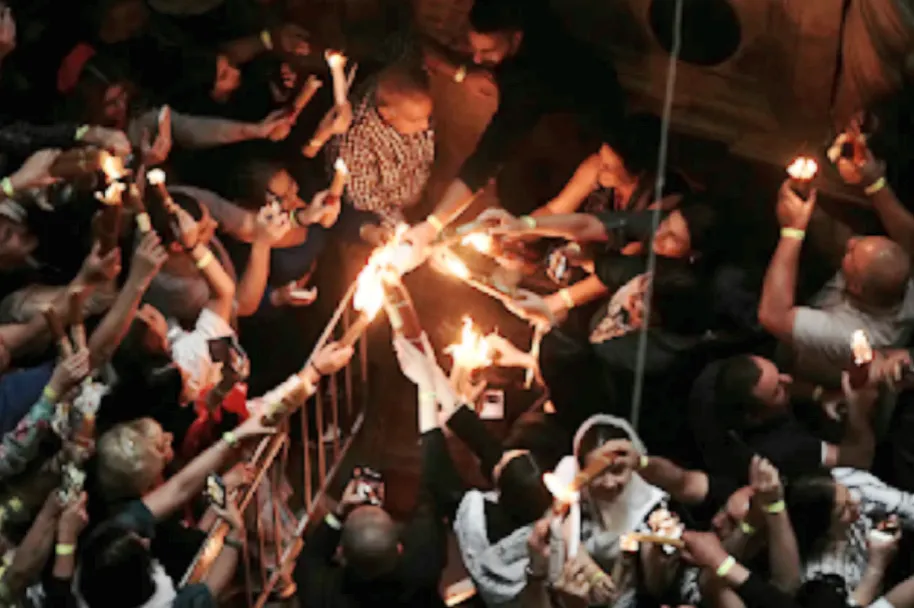
For those fortunate enough to witness it firsthand, the Holy Fire ceremony is not merely a spectacle—it is a living symbol of God’s eternal light, a call to faith, and an affirmation of hope in the risen Lord. As pilgrims leave the Church of the Holy Sepulchre with their candles alight, they carry more than fire; they carry the promise of Christ’s presence, illuminating lives around the world.
*Cover Photo/Thumbnail Photo Taken by Ammar Awad
RELATED ARTICLES
Were Michael and Uriel Present at the Crucifixion?
Lessons from Jesus Healing the Soldier’s Ear at Gethsemane
What Happened During the Last Supper? Meaning Explained
What Happened to Jesus at Gethsemane? Meaning and Lessons