
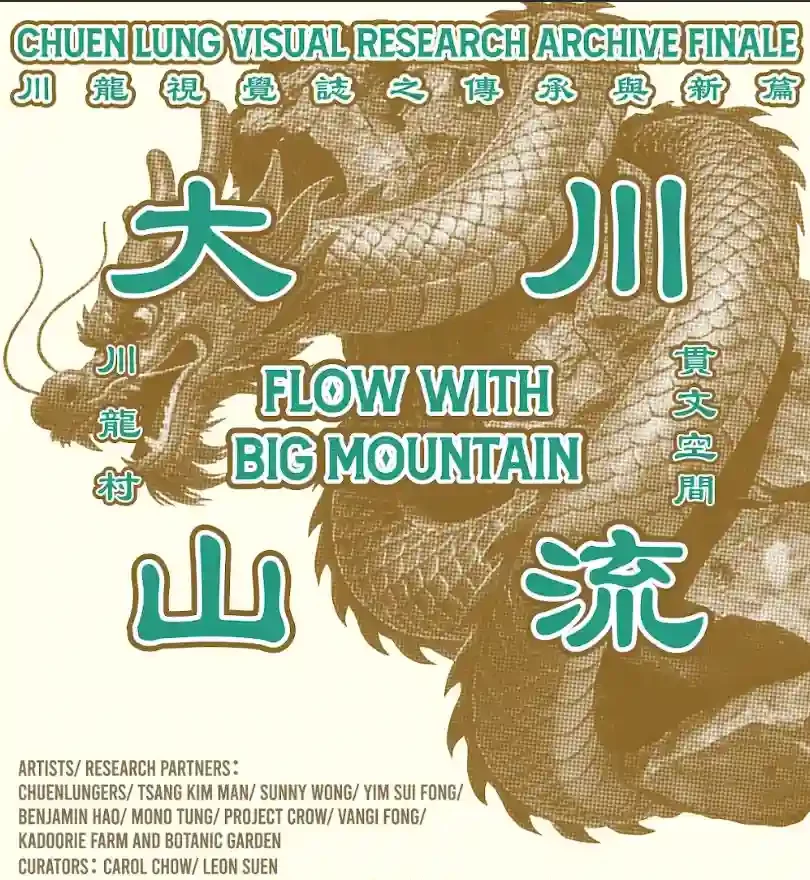
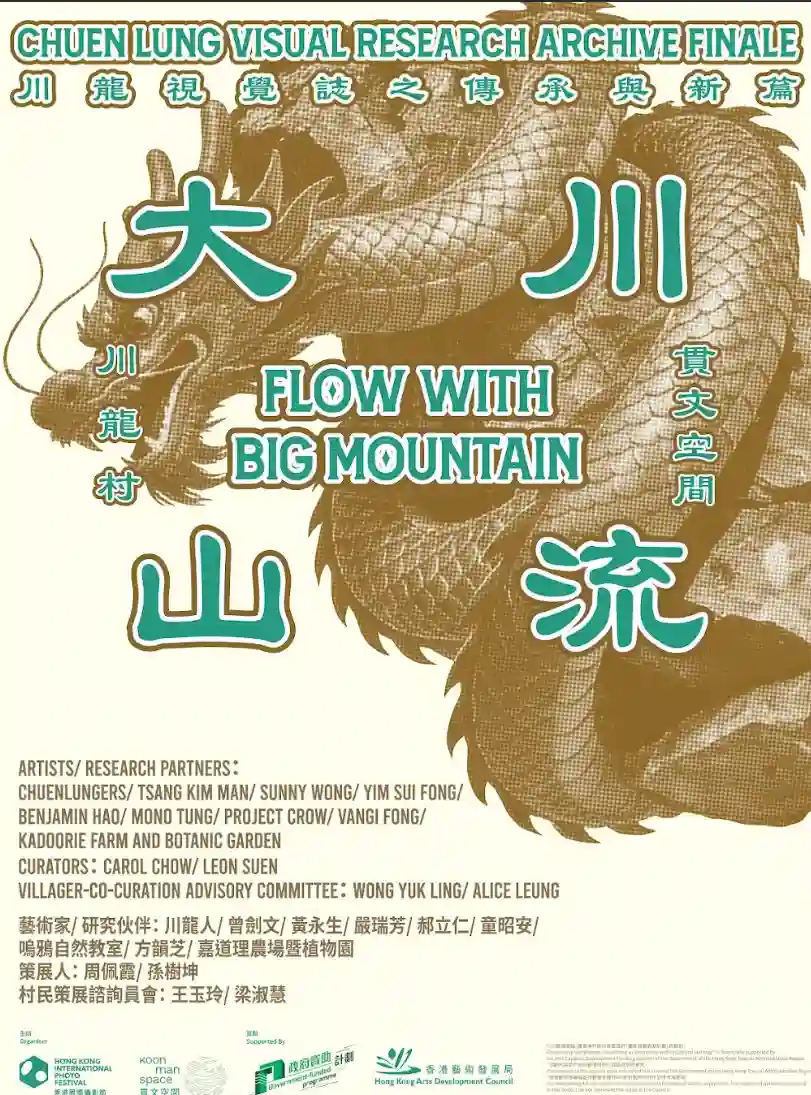
Koon Man Space’s Chuen Lung Visual Research Archive Finale Flow with Big Mountain opens
SHARE
Hong Kong International Photo Festival (HKIPF) proudly presents Chuen Lung Visual Research Archive Finale: Flow with Big Mountain at Koon Man Space, showcasing the final research outcomes of the Chuen Lung Visual Research Archive. As a key research initiative of HKIPF, the project was launched following the official opening of Koon Man Space in Chuen Lung Village in 2024. Supported by the Hong Kong SAR Government’s Arts Capacity Development Funding Scheme, the project brings together eight artists and research partners to work across multiple perspectives—including sound, vernacular knowledge, twenty‑four‑hour everyday life in the 1960s, movement and migration, local use and imagination, as well as seeds and natural ecology. Through conducting phased fieldwork, documenting oral histories, and integrating a wide range of historical materials, they progressively organised and established a visual and situated archive of Chuen Lung.
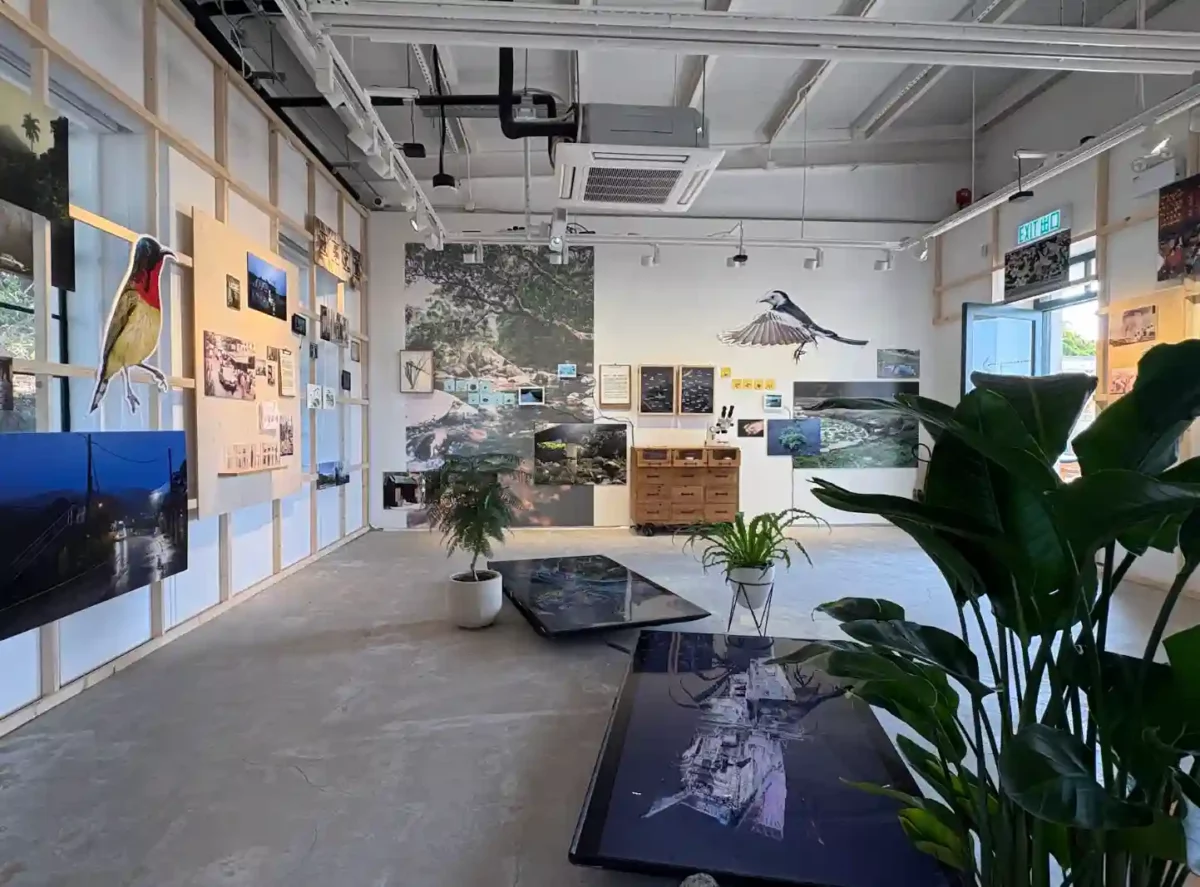
Chuen Lung Visual Research Archive seeks to showcase and preserve the cultural heritage of this Hakka village, which boasts hundreds of years of history, while documenting its transformation from a rural settlement to a modern society. Throughout 2025, the project unfolded through three Open Studio presentations—Investigation of Sound and Modernology, Temporal Space: Chuen Lung Village in Flux, and The Web of Life: Seeds, Fauna and the Chuen Lung Habitat—offering the public access to different stages of the research process. These encounters invited audiences to engage closely with Chuen Lung and to observe how artists respond to memory, lived experience, and the accumulation of local knowledge through sustained interaction with place. Flow with Big Mountain integrates and presents the findings of the research, while showcasing Chuen Lung’s culture and distinctive natural ecology through a diversity of artworks. The exhibition runs from 31 January to 31 March 2026.
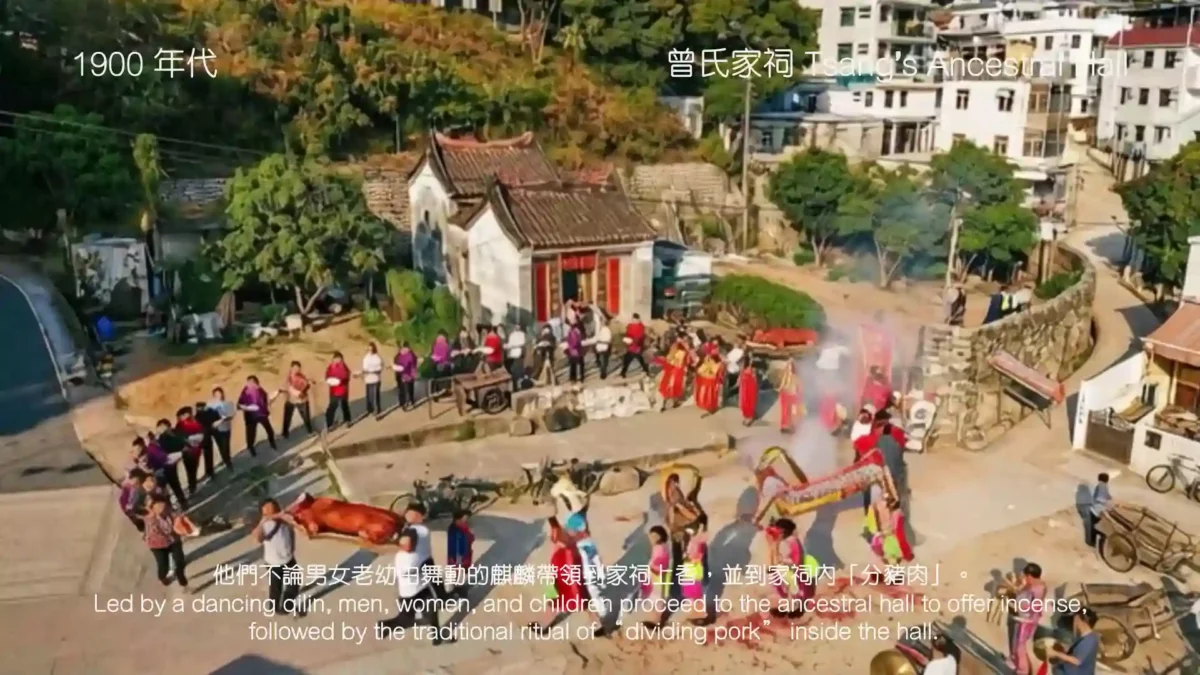
The exhibition foregrounds participation as an essential component of the archive itself—emerging not only from researchers and artists, but also from villagers whose long‑term involvement has shaped the project. Among them was the late Mr. Tsang Kim Man, a Chuen Lung villager who contributed extensively and left behind a collection of precious hand‑drawn works, which are exhibited alongside those of other artists and research partners. Together, they add a vivid and authentic local perspective to the archive, underscoring the vital role of villagers as co‑constructors of the archive.
The curatorial team regards the entire Chuen Lung community as vital collaborators in the project. Whether as contributors to the archive, collaborators in research, or visitors engaging with the works during the exhibition, each of them shapes this continuously evolving archive in distinct ways. This participatory approach—spanning individuals to the collective—ensures that Flow with Big Mountain is not only a presentation of research outcomes, but also an extension of community-driven co-creation.
Seven other artists–research partners have created new works specifically for Flow with Big Mountain. The exhibition extends beyond the indoor exhibition rooms of Koon Man Space into outdoor areas and further throughout Chuen Lung Village, situating artistic practice within the rhythms of village life.
By shifting from modes of viewing toward practices of participation, Flow with Big Mountain seeks to transform the archive from a static repository into an extension of relationships—one that remains in motion among artists, villagers, researchers, and audiences alike. Responding to contemporary artistic concerns with co‑creation, relationality, and process, the exhibition opens new chapters through acts of transmission, allowing the story of Chuen Lung to continue unfolding through collective involvement.
Tsang Kim Man: Man Gor’s Life Map
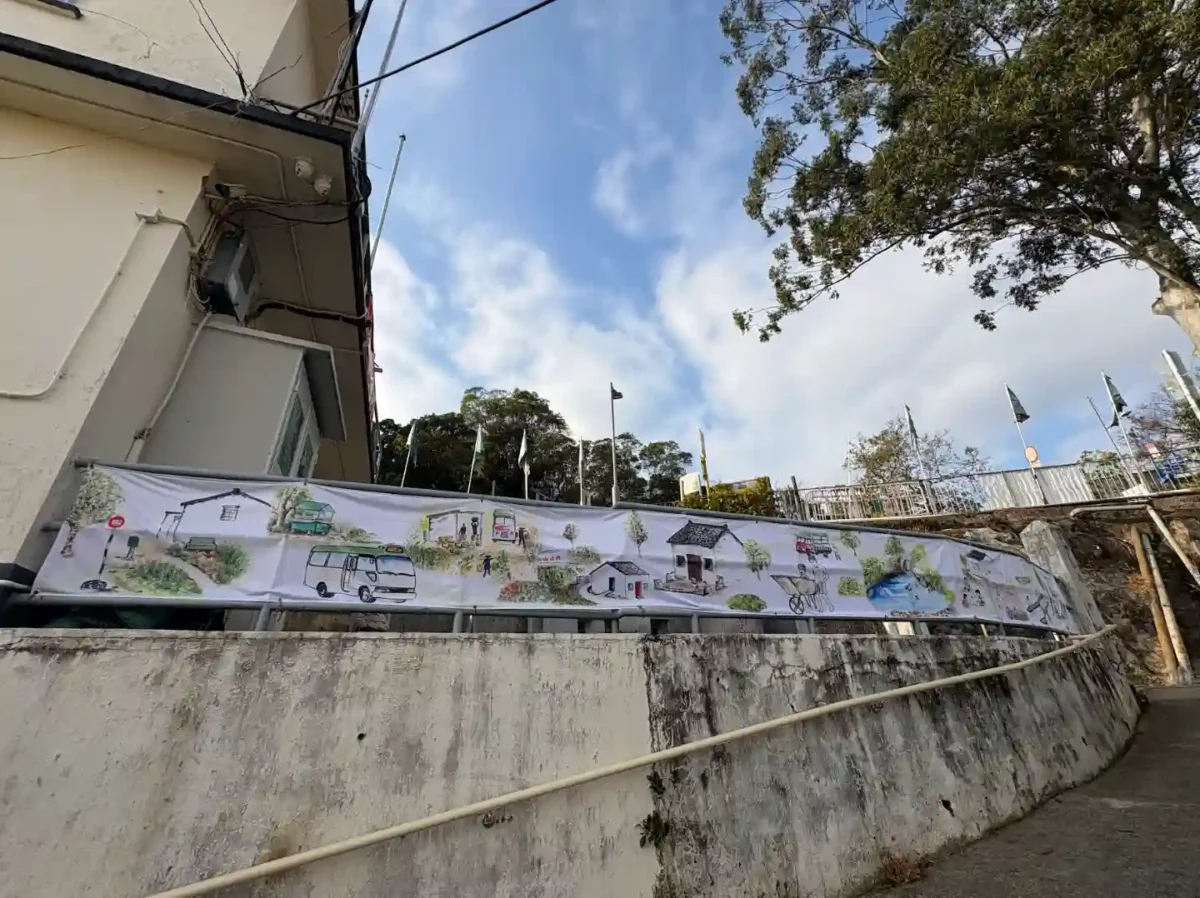
Man Gor’s Life Map is based on the daily life of Tsang Kim Man (also known as Man Gor) in Chuen Lung Village, depicting memories and stories of his upbringing at Tai Mo Shan. Since childhood, he roamed the mountains and wilderness, familiar with every inch of land in Chuen Lung. His paintings are a living map, connecting the village’s scenery, its people, and the traces of time.
During Tsang’s childhood, he would play by the streams with other village children, soak in the swimming holes for an afternoon, or catch yellow eels, catfish, stream snails, and freshwater shrimp in the mountains and forests. Smoke would waft up from cooking fires in the mountains… These scenes are all part of the daily lives of Chuen Lung. Each painting reflects his deep connection to Chuen Lung and serves as a tribute to his life.
Tsang displayed his artistic talent in painting from an early age. He later ventured into photography, personally developing his works, and worked in the golden age of Hong Kong’s industrial era. As the wheel of time turned, he chose to return to the countryside, continuing to create with a sincere and humble spirit—documenting the culture and natural ecology of Chuen Lung Village while actively participating in village affairs.
Sunny Wong: River of Memory
Sunny Wong’s work examines the composition and hidden rules of contemporary society, along with the fragile states of personal existence within it. He gathers daily fragments through the lens: the fleeting expressions of news anchors, sunsets streaming online, trees uprooted by typhoon winds. In 2015, he established Sun Office Studio to advance art education. He believes hands-on creation empowers everyone to develop a unique expressive language and gain deeper insight into self and world.
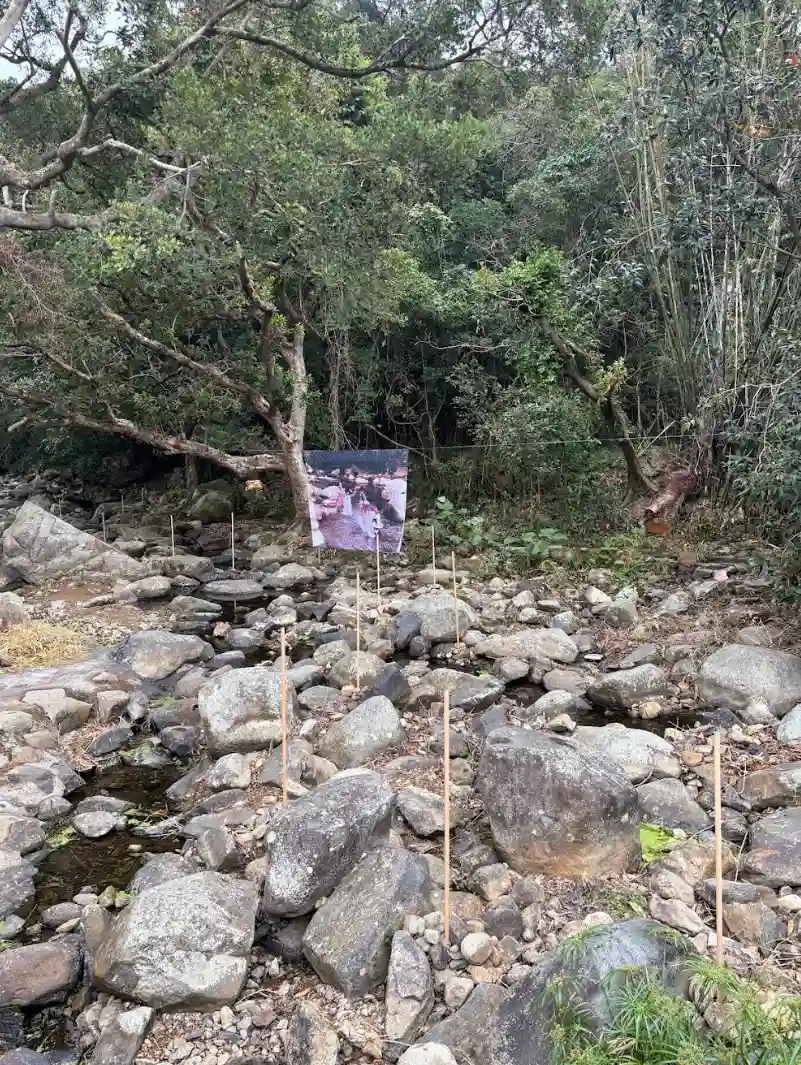
In River of Memory, Wong documented the river of Chuen Lung Village through photography, engaging with villagers during the creative process to collect their oral histories. He inserted slender wooden stakes into the riverbed, marking a line with blue paint indicating the highest water level of the past—a boundary that can never be retraced. A photograph of children playing in the water in bygone days is enlarged and installed across the now‑calm river channel, juxtaposed with the present landscape. The river of that summer was frozen in the lens, while the real flowing water had long since moved on.
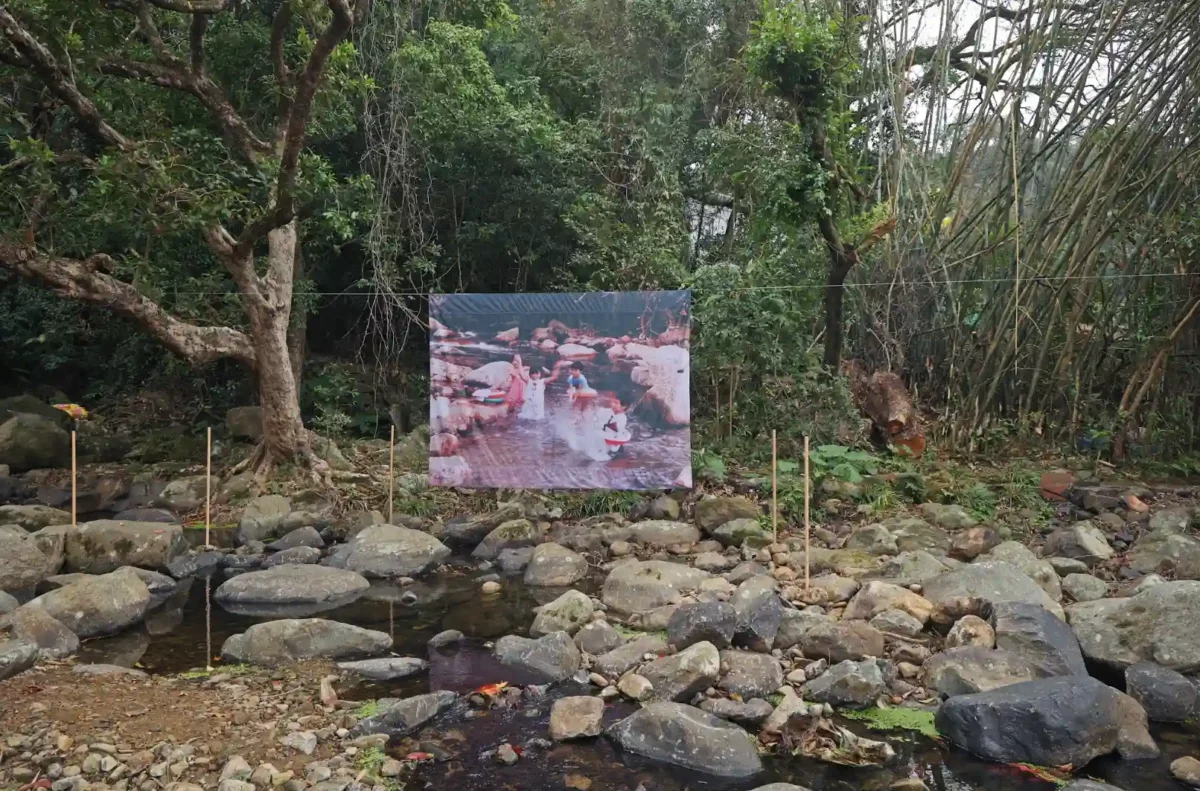
Villagers recall the river as a communal swimming pool, the shifting stones after downpours, children painting with colour pebbles on the boulders—these narratives resonate with the photograph, transforming the river into a living archive. The work not only documents the transformation of the Chuen Lung river, but
also reflects upon memory, like a flood, perpetually washing over the past, revealing its ever-shifting visage within the flow of time. Days flow, landscapes flow, sensations flow—one cannot step into the same river twice.
Yim Sui Fong: Gwo Lung Tong
Yim Sui Fong (Sui Fong) is a Hong Kong artist and Assistant Professor in the Department of Fine Arts at The Chinese University of Hong Kong. Her practice spans socially engaged art, sound and video installations, using experimental pedagogy to explore collective knowledge production. Her works address negotiation, memory, and everyday politics.
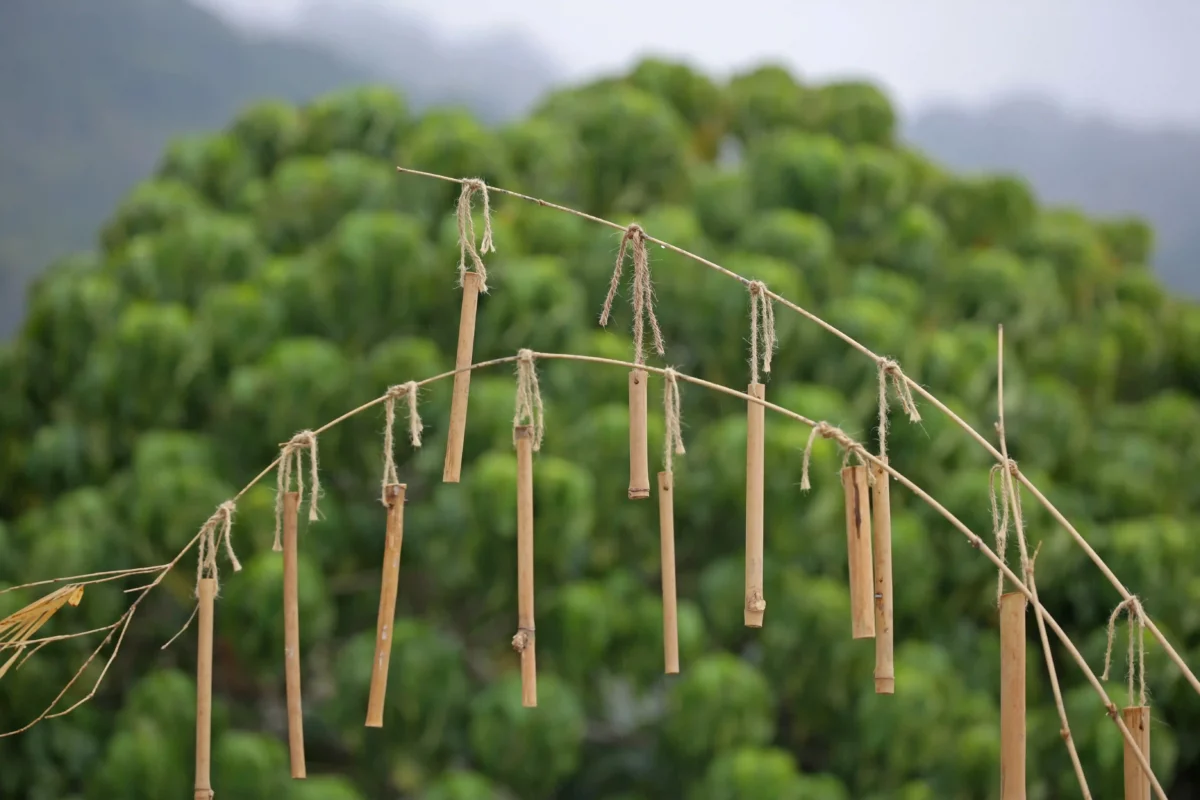
In Gwo Lung Tong, Sui Fong approaches the entire village of Chuen Lung as an instrument to be played. Drawing inspiration from the Kolintang—a traditional percussion instrument composed of multiple bamboo elements struck to create rhythm—the artist constructs an experimental sound device using materials collected around the village, including bamboo, stones, and everyday objects. Through linking, suspending, and juxtaposing these items, the installation allows sound to emerge through acts of striking, falling, and retrieval.
The project is anchored in two conceptual threads. The first is an attempt to “listen to what already exists in Chuen Lung”: rather than transforming objects into musical notes, the work attends to the inherent tones and rhythms embedded within the materials themselves. The second is “picking up and holding”—a repeated gesture rooted in villager Man Gor’s childhood memories of collecting fallen pine needles, opening up reflections on the relationship between land, body, and community.
Rooted in a childhood memory, the instrument evolves through movement, collision, and the chance rhythms generated by interaction. The act of playing—through curiosity, experimentation, and missteps—opens up a space of resonance with the village, inviting ongoing exchange with its environment.
Benjamin Hao: Returning to Chuen Lung
Benjamin Hao is an interdisciplinary artist whose practice explores the relationships between individuals, communities, and the natural environment.Working across different media and formats, Hao creates situations that invite viewers and participants to question familiar assumptions and consider new ways of seeing and narrating the world.
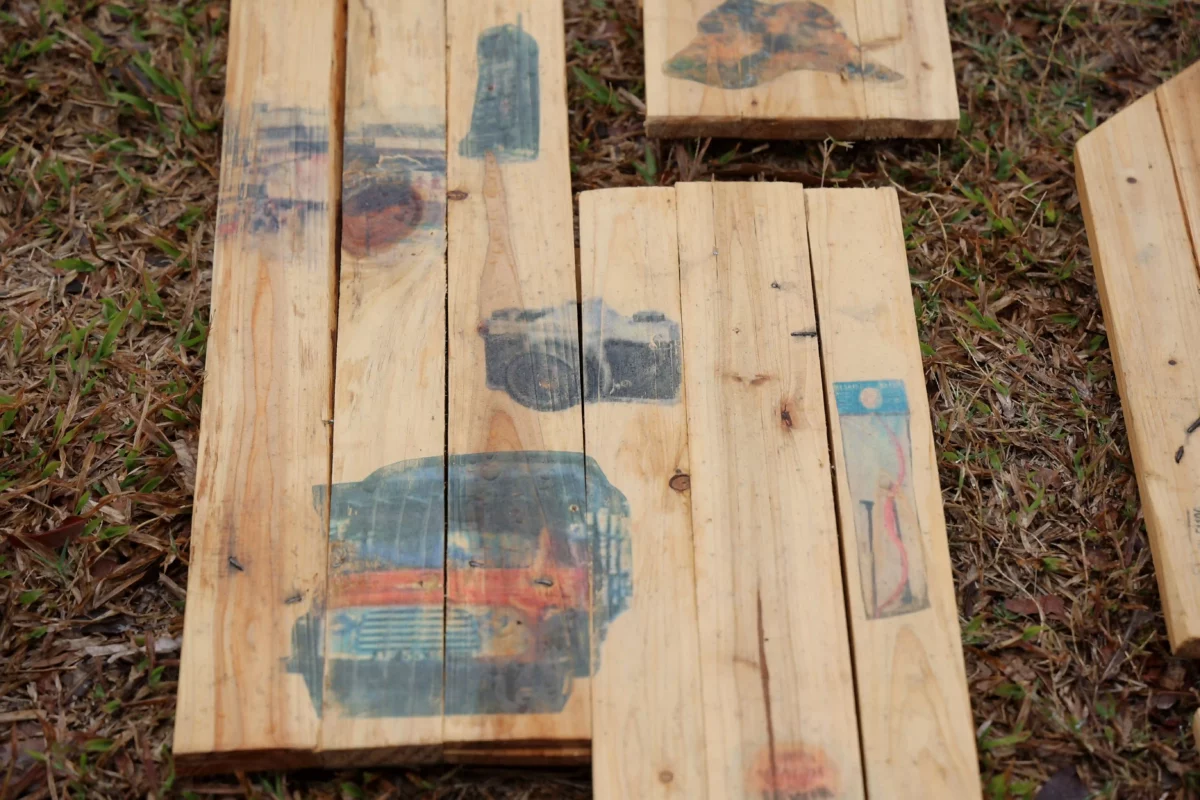
Returning to Chuen Lung grew out of field visits and conversations with villagers. Drawing inspiration from the wooden boards once used at Yuet Lai Farm for harvesting watercress, the artist reinterprets them as carriers of stories. Five boards of different shapes bear imprints of interviews, photographs, and traces of daily life from five villagers, carefully unfolding the flows and connections between Chuen Lung and the city from the 1960s to the present. Visitors are invited to arrange the boards freely across the grass lawn, generating new configurations and interpretations through collective participation.
Alongside this installation is the participatory project Chuen Lung Snapshots. Visitors may borrow instant cameras to capture their encounters with the village. These fleeting gazes become part of the land’s collective memory, weaving individual moments into a shared archive of place.
Mono Tung: Three Times of Chuen Lung · When Air Holds Memory
Mono Tung is an artist working at the intersection of technology and spatial practice. His work employs inflatable structures, AI-generated imagery, and participatory installations to explore how memory, emotion, and collective imagination take form through air and interaction. Through experimental processes, he engages local histories while opening possibilities for imagining the future.
This work unfolds through time, translating villagers’ reflections on the past, present, and future into AI-generated moving images and participatory inflatable structures. Oral memories are transformed into a continuously evolving visual system that assembles layered perceptions of place and story. The inflatable structure, using air as medium and colour as language, invites visitors to touch, move, and interact—participating in the reconnection of memory and the collective imagining of what is yet to come.
The work is composed of two parts:
Three Times of Chuen Lung
This work combines historical maps, spatial scanning, and AI-generated imagery to reinterpret villagers’ memories, everyday realities, and future visions. Rather than reconstructing history, the images treat memory as an ongoing process—one that is visually generated, rearranged, and gradually composed into a sensory system of place and narrative.
When Air Holds Memory
This participatory inflatable structure uses air as a medium for carrying memory and aspiration. Variations in colour suggest multiple future possibilities, while fragments of imagery linger on the surface as traces. Through interaction and collective engagement, visitors become part of an unfolding process in which local memory is activated, sustained, and extended into the future.
Project CROW:Wild Properties
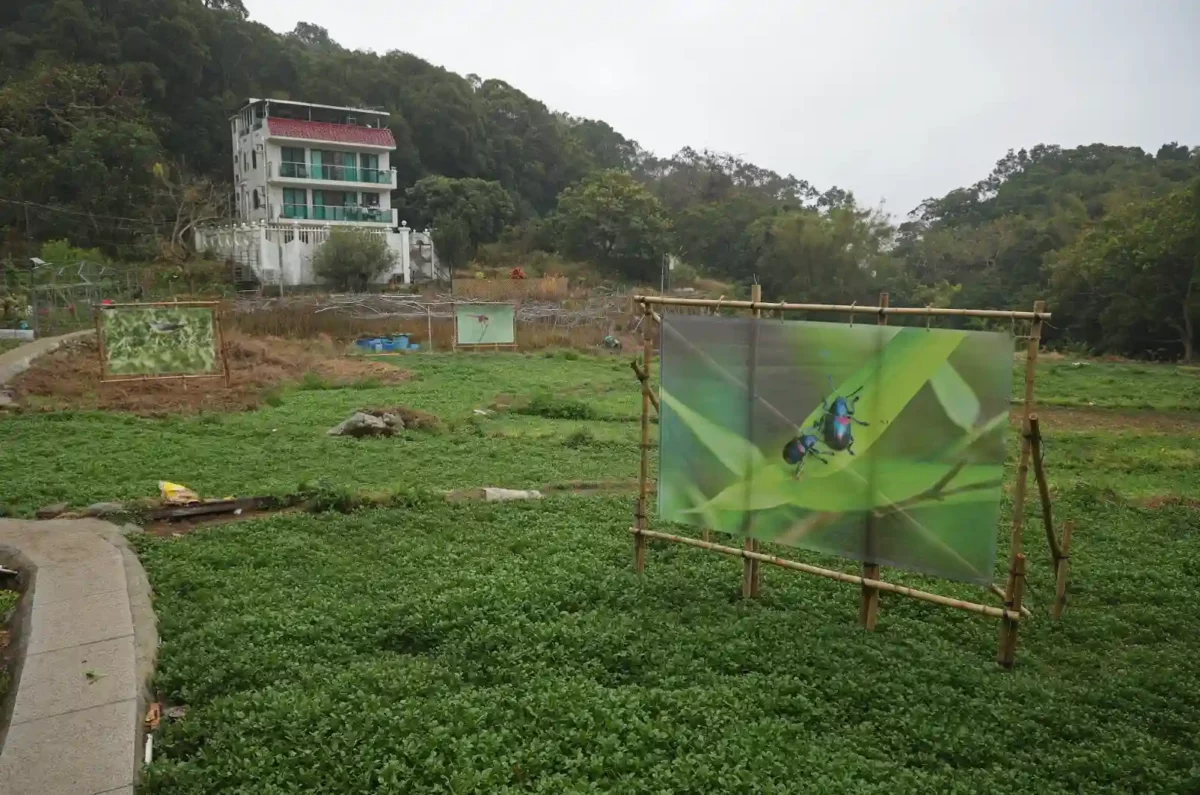
Project CROW has designed a series of nature tours, nature experiences, and nature art workshops for Koon Man Space. Through professional guidance, the initiative aims to help participants better understand and connect with nature. Additionally, Project CROW has collaborated on a year-long study of Chuen Lung’s fauna, ultimately submitting a professional report to Koon Man Space and the public.
The work takes as its starting point the concept of the Land (地產) from the Rites of Zhou: Offices of Spring (《周禮·春官宗伯》), reconsidering the dual meanings of the Land. In contemporary usage, the Land is often understood as an asset—linked to ownership, tenure, and real estate. In classical context, however, the Land refers to its productive capacity: the abundance of plants and animals. The project emphasises that only through restrained use of resources can humans remain in balance and harmony with the natural world.
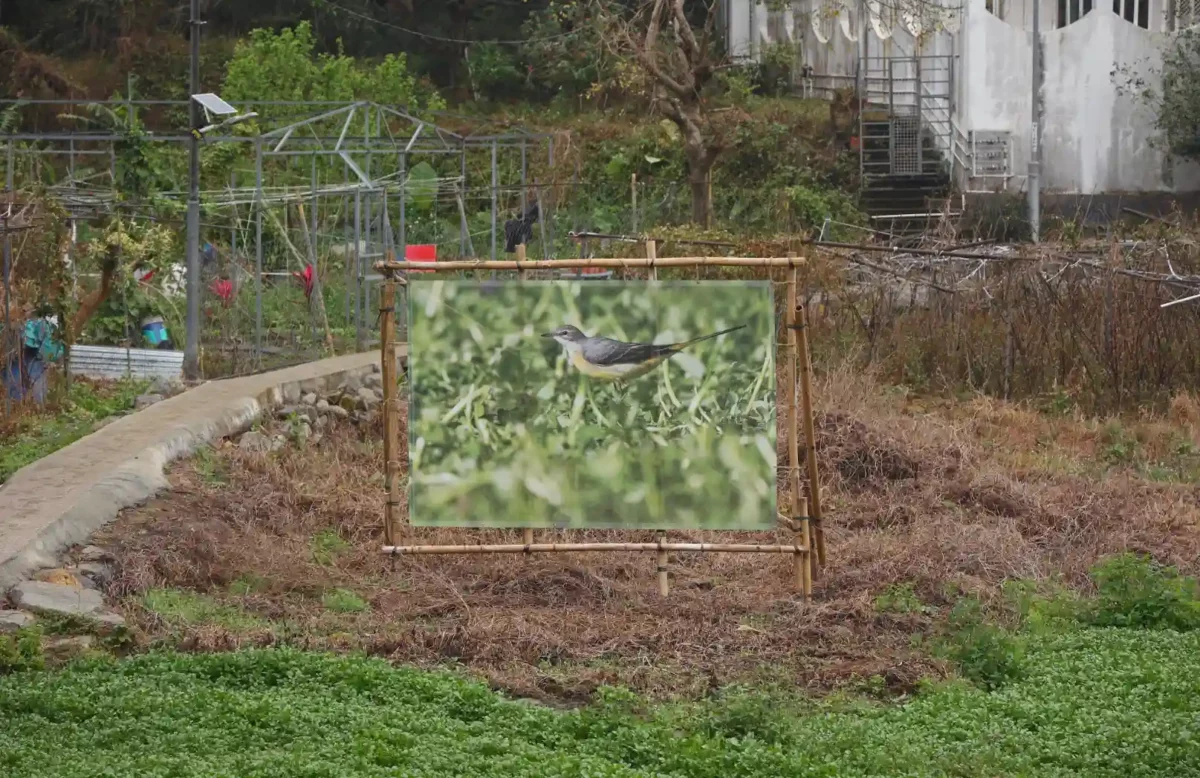
In Chuen Lung’s everyday landscape—between bus stops, houses, farmland, ancestral halls, and hillside graves—these two understandings of the Land intersect: the zones demarcated by humans for habitation, and the diverse life forms sustained by the soil. The work asks: what first drew animals to settle here? And are landscapes shaped according to human preference suitable habitats for them? Ultimately, coexistence depends on how residents relate to the land—whether they take without exhausting, and live without destroying—so that both forms of the Land may continue to flourish together.
This project presents portraits of nature “indigenous residents” in close proximity to human dwellings in the village, while reflecting on where suitable habitats for them might be found. Although these imagination processes are informed by ecological research and observation, they are inevitably shaped by human perspectives. Borrowing the visual language of real estate signage, the project reframes the act of searching for housing from an animal’s point of view. It does not propose a transaction, but instead invites a reconsideration of how we perceive land, value, and the coexistence of all living beings.
Vangi Fong: Chuen Lung Seed-graphy
Vangi Fong is an artist, independent curator, and university lecturer. Engaged in the planning of community art, art education, and public engagement projects, she specialises in designing artistic experiences that enable participants to explore multiple possibilities through creative processes. In 2012, she founded the Hill Workshop, with a core strategy of enabling broader public access to direct encounters with artists. Through exposure to diverse artistic media, the studio aims to encourage participants to bring new perspectives into everyday life and to reflect on relationships within their communities and with others.
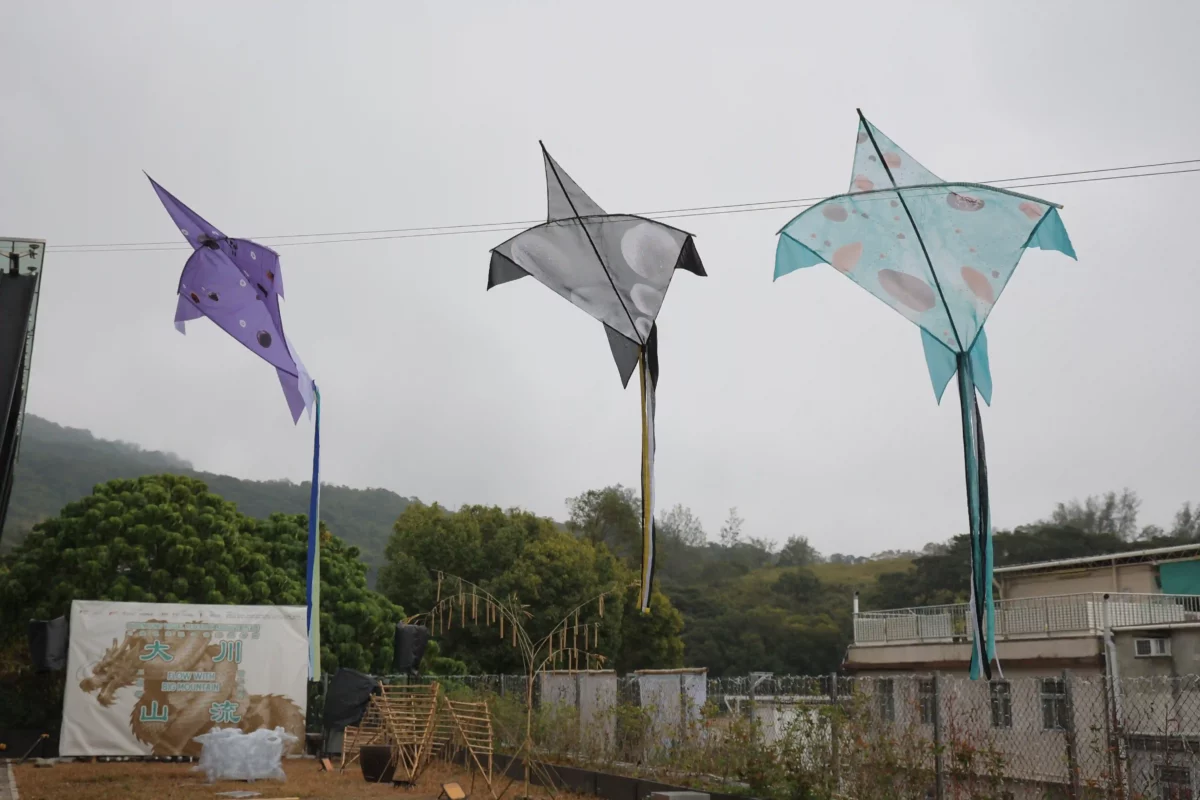
Kites in the air, seeds in the soil—this work brings images of Chuen Lung seeds onto the surface of a kite, revealing forms that are usually concealed beneath the ground. Seeds, transmitted across generations, carry traces of ecological adaptation as well as the memories and conditions of a particular place. They function as repositories of time, bearing the imprint of lived and environmental histories.
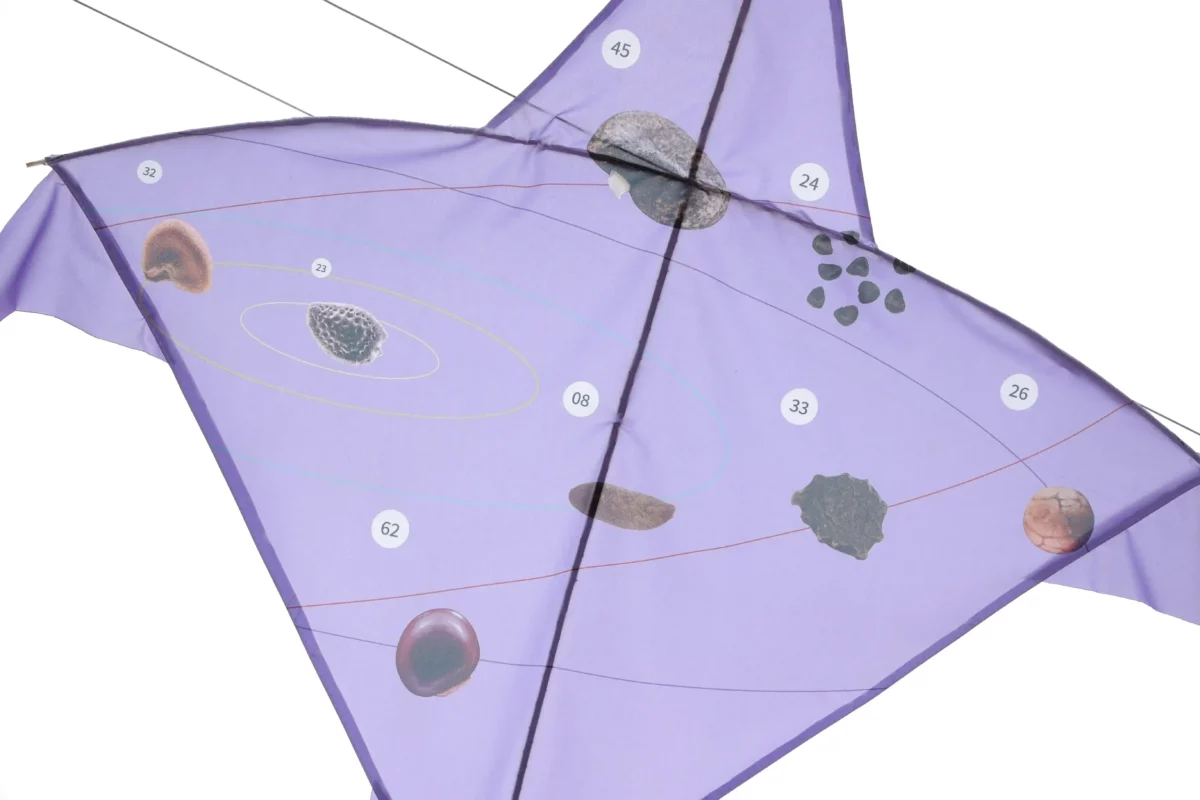
For centuries, the landscape of Chuen Lung has borne witness to the stories of its settlers—from taming wild terrain to cultivating tea and rice, even tracing origins to nurture watercress. Here, the land reveals how generations learned to coexist with their environment. Chuen Lung Seed-graphy collects local seeds from the region, unveiling the intricate relationship between villagers’ farming practices, native crops, and the surrounding ecology.
Through the diversity of seeds, it reflects on the transformations in human life , and traces the deliberate and inadvertent processes of selection—how surviving local varieties became the taste of Chuen Lung. Carried by birds, rivers, and wind, wild seeds take root, weaving another layer of untamed landscape amidst the undergrowth.This project uses planting as an entry point to spark dialogue: Where do roots come from? It all begins with a seed. Where will roots grow? Through sharing, they extend outward.
Kadoorie Farm and Botanic Garden: Plants, People and Village Life: Ethnobotanical Stories of Chuen Lung
Kadoorie Farm and Botanic Garden (KFBG) is dedicated to species conservation and ecosystem restoration in Hong Kong, while promoting knowledge of nature conservation and sustainable living through education and public engagement. Kadoorie Farm and Botanic Garden conducts plant surveys in Chuen Lung and the nearby Tai Mo Shan area, and organises workshops and lectures at Koon Man Space. The project will culminate in the creation of a booklet as a record. The aim of the project is to document the oral history of Chuen Lung villagers’ use of plants, combining this with the expertise of KFBG’s plant conservation specialists. This initiative seeks to enhance public understanding and awareness of the plants in Chuen Lung and Tai Mo Shan through various means, while also highlighting the importance of conserving native plant species.
Ethnobotany is the study of the dynamic relationships formed between people and plants over time, typically focusing on the use, traditional knowledge, belief systems, management methods and classification of plants within certain societies, both past and present. With poor accessibility to Tsuen Wan and other nearby towns in the past due to the area’s convoluted topography, the villagers’ rich ethnobotanical knowledge evolved and enabled the village to thrive despite limited resources. Nowadays, the use of local plants is slowly being forgotten, but some villagers still keep their memories in mind.
The collaboration between KFBG and Chuen Lung Village seeks to document various ways in which plants have traditionally been used by villagers through a process of accessing and expressing oral histories, observed through a lens of contemporary expertise in plant ecology. It is hoped that, overall, this project will boost public awareness of local plants within the changing environment – both natural and human – in Chuen Lung Village itself, as well as more broadly in the Tai Mo Shan area, via diverse participatory methods, while emphasising elements of native species conservation.
Celebrating together with vibrant community events
Beyond the exhibition itself, a diverse array of exciting activities will also be featured, spanning performing arts, talks, food and beverage, adventure, and guided tours, offering audiences a rich and memorable experience. Highlights include dance performances specially designed for Chuen Lung Village and Koon Man School, sharing traditional Hakka dishes lovingly prepared by villagers, a concert co-performed by the daughter of a local restaurant owner and a music ensemble, a checkpoint activity through Chuen Lung, and tours led by Chuen Lung residents. These arrangements not only allow participants to engage more deeply with the culture and everyday rhythms of the village through sensory experiences and dialogue, but also respond to the memories and practices of its people in a festive atmosphere. Artists, research partners, and local residents will join hands to spark intergenerational and cross-disciplinary conversations, celebrating the stories and spirit of Chuen Lung together. For details and sign-up, please visit linktr.ee/koonmanspace.
*All Photos from Koon Man Space
RELATED ARTICLES
Why Fasting Is Encouraged During Holy Week for Christians
Tencent Cloud Partners with ComfyUI to Transform 3D Workflows in Open‑Source AI
Prayer Over Travel: The True Meaning of Holy Week
Why Holy Week Matters for Christians Today and Forever