

More Indonesian Parents Are Introducing Foreign Languages Early—What Does This Mean for Child Development?
SHARE
In an increasingly interconnected world, more parents in Indonesia are beginning to introduce foreign languages to their children from an early age. Beyond being viewed as a valuable communication skill for the future, language learning is increasingly associated with benefits for children’s cognitive development, ranging from memory enhancement to greater cognitive flexibility.
A growing body of research suggests that learning a new language engages multiple brain functions simultaneously, including memory, attention, problem-solving, and the ability to adapt to new information. Activities such as recognizing language patterns, understanding context, and regularly recalling vocabulary serve as forms of mental stimulation that help strengthen these cognitive abilities.
According to research cited by Duolingo, learning a language on a regular basis requires the brain to continuously retrieve information, identify patterns, switch between concepts, and adapt to new linguistic rules—activities that function much like a workout for the mind.
Meanwhile, a study conducted by Baycrest and York University found that adults who used Duolingo for approximately 30 minutes a day over a four-month period demonstrated measurable improvements in executive function and cognitive performance. Researchers observed gains in several areas, including working memory, focus, and cognitive flexibility compared with a control group.
“Learning a new language does more than expand a child’s vocabulary—it also helps train how they recognize patterns, connect information, and adapt to different contexts. Across various studies, these abilities have been linked to the development of cognitive flexibility, which serves as an important foundation for learning and problem-solving in everyday life,” said Ayoe Sutomo, Child, Adolescent, and Family Psychologist.
However, Ayoe emphasized that these benefits do not appear overnight. Consistency, regular learning frequency, and enjoyable learning experiences remain important factors in supporting a child’s success in acquiring a new language. She also highlighted the importance of parental guidance when children use digital devices as learning tools.
These findings add to the growing body of evidence surrounding the unique cognitive demands of language learning. Unlike many educational activities that focus primarily on a single skill, language learning simultaneously engages memory, attention, reasoning, and decision-making.
The trend of foreign language learning is also becoming increasingly visible in Indonesia, where parents are combining everyday interactions, formal education, and various digital platforms to introduce languages to their children from an early age.
In line with this trend, language-learning platforms are increasingly being used as complementary tools for learning at home. Globally, Duolingo currently serves more than 133 million monthly active users and over 52 million daily active users worldwide. Through its interactive, game-based approach to learning, the platform helps make language learning more accessible and engaging for learners of all ages.

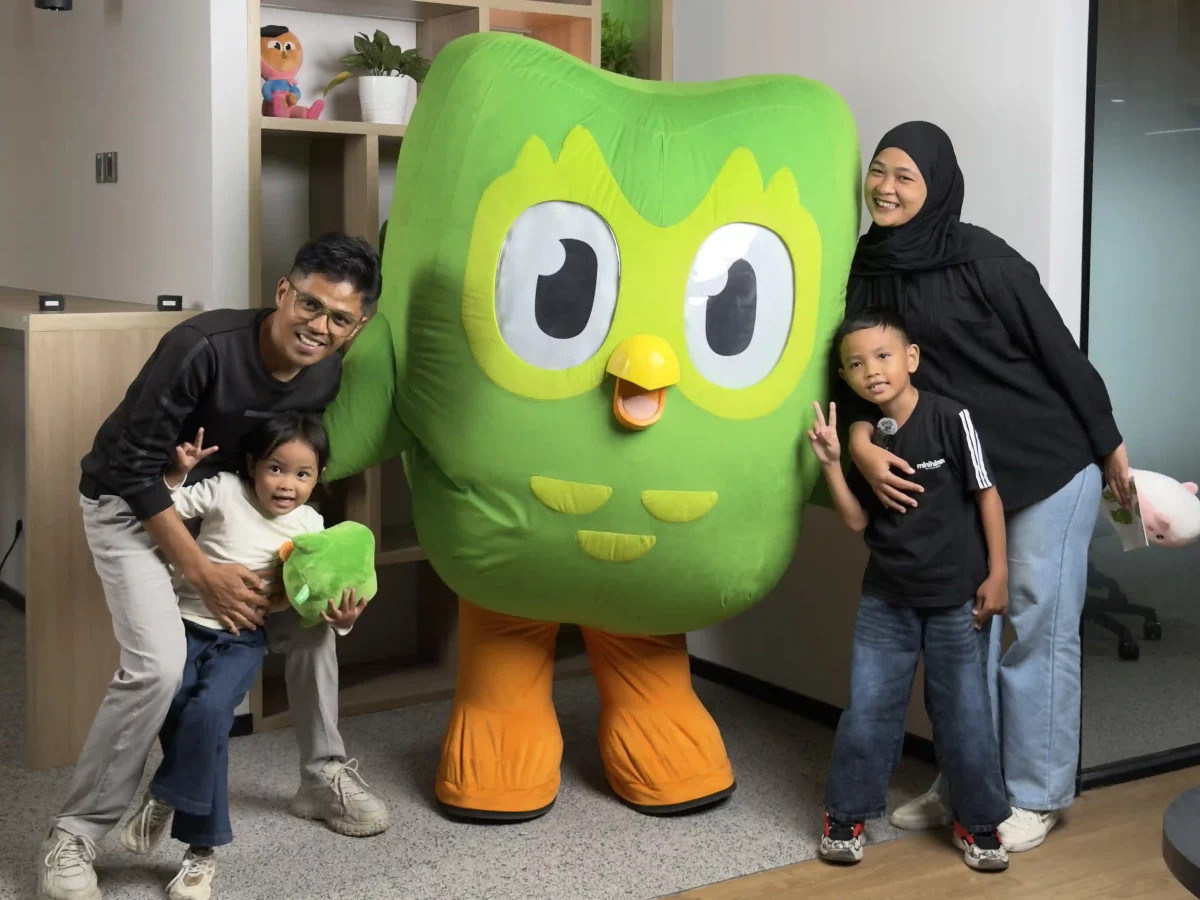
One example comes from Hudzaifah Giyan G., who was introduced to multiple languages from an early age. According to his father, Gosra Andri Putra, Hudzaifah’s interest in languages developed naturally through a combination of everyday interactions, multilingual exposure, and the use of various learning resources, including digital platforms.
“To answer auntie and uncle’s question: Hudzaifah was introduced to multiple languages from a very young age. Around the age of 2.5–3 years old, he started learning English on his own, and one of the tools he used was Duolingo. In my opinion, it’s safe for kids and also fun, because the app is designed like a game and offers many different languages. Most importantly, as with any gadget or game, it’s still important for parents to supervise their children’s usage” said Gosra.
Beyond academic benefits, multilingualism also provides children with opportunities to engage with different cultures, perspectives, and ways of communicating. As more families seek ways to support their children’s development in an increasingly globalized world, language learning has become more than just a communication skill. For many parents, it represents a long-term investment in nurturing curiosity, adaptability, and a foundation for lifelong learning. With access to more than 40 languages and an interactive learning approach, Duolingo helps support that journey in a flexible and accessible way for learners of all ages.
*Cover Photo/Thumbnail Photo From Duolingo
RELATED ARTICLES

PUMA Launches SM Megamall Store with Interactive In-Store Games

Beijing Marriott Marquis Hotel Hosts China Open Delegation During Its Opening Weeks

A live-action LEGO® Friends musical is now streaming for free

Bible Verses for Overcoming Depression

Alaska Airlines and Hawaiian Airlines to introduce new chef-curated menus and premium wine program for international Suites guests