



Judas, Seron, and the Cost of True Faith
SHARE
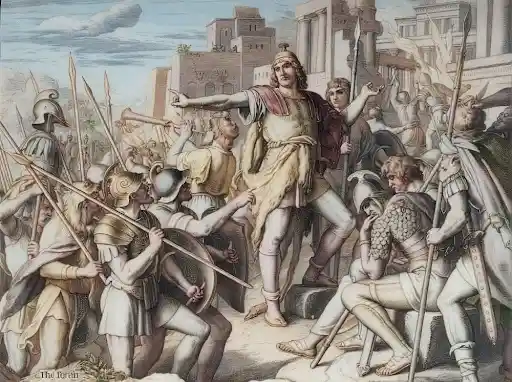
The story of Judas Maccabeus and the general Seron offers a sobering lesson about faith that costs something real. In a time when Israel was oppressed and many compromised, Judas stood firm, trusting God rather than numbers or power. His confrontation with Seron in 1 Maccabees reminds Christian readers that genuine faith is proven when obedience feels risky.
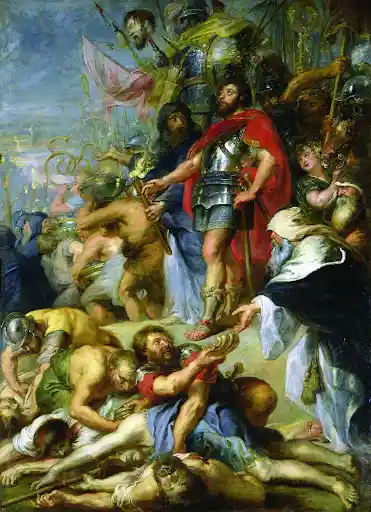
Seron, a commander of the Seleucid forces, marched against Judah with confidence rooted in military strength. Scripture records that he came “with a mighty army” to crush the revolt (1 Maccabees 3:13). From a human standpoint, Seron’s advantage was undeniable. Yet his confidence rested on force, not righteousness. Like many enemies of God’s people throughout Scripture, he underestimated the power of a faithful remnant relying on the Lord.
Judas, by contrast, faced the battle with humility and prayer. When his men feared the size of the opposing army, Judas answered with words that still echo today: “It is easy for many to be hemmed in by few, for in the sight of Heaven there is no difference between saving by many or by few” (1 Maccabees 3:18). This was not reckless optimism. It was a settled trust in God’s sovereignty. Judas understood that victory belongs to the Lord, not to human strength.
The cost of such faith was high. Judas and his followers risked their lives, reputations, and futures. They chose obedience over safety. “We fight for our lives and our laws,” Judas declared, grounding the conflict in faithfulness rather than ambition (1 Maccabees 3:21). True faith, the story shows, is never merely internal. It expresses itself through costly action.
Seron’s defeat was swift and decisive. The text tells us that Judas routed him, and Seron’s army fled in confusion (1 Maccabees 3:23–24). This outcome was not simply a military upset; it was a theological statement. God honors those who trust Him, and He brings low those who rely solely on earthly power.
For Christian readers today, Judas and Seron represent two paths. One path trusts visible strength, cultural dominance, or personal security. The other clings to God’s promises, even when obedience invites opposition. Judas’ example challenges believers to examine where their confidence truly lies.
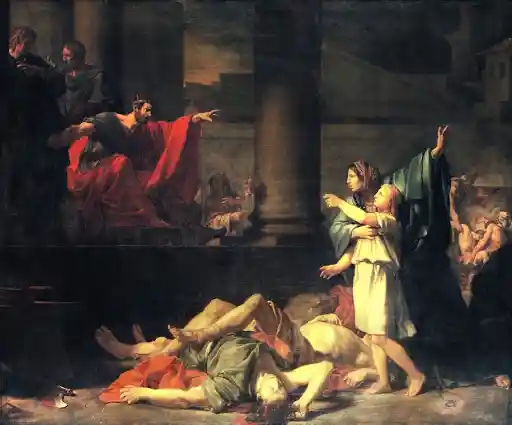
The cost of true faith remains real. Following God may mean standing against prevailing pressures, choosing holiness over comfort, and obedience over approval. Yet the story of Judas reminds us that faith anchored in God is never wasted. As Scripture affirms, “The victory of the battle does not depend on the size of the army, but on the strength that comes from Heaven” (1 Maccabees 3:19).
In an age tempted to measure success by numbers and influence, this ancient account calls believers back to faithful dependence. God still seeks hearts willing to trust Him fully, whatever the cost. When faith is tested, may Christians remember Judas’ courage, Seron’s fall, and choose obedience that honors the Lord above all else. Such faith endures trials, glorifies Christ, and shapes witness for generations.
*Cover Photo/Thumbnail Photo thetorah.com
RELATED ARTICLES

Travelers from Japan, South Korea, and Hong Kong Invited to Explore Qixingtan with An Ji-Hyun and Experience Hualien, Eastern Taiwan’s “City of Healing”

The Eurovision Effect: Agoda Maps Asia’s Travel Interest Ahead of the Bangkok Grand Final

RENAISSANCE HOTELS REIMAGINES EVENINGS ACROSS ASIA PACIFIC WITH NEW BEVERAGE RITUALS COLLECTION

Hengqin Chimelong Resort: An All-in-One Getaway Beyond Hong Kong & Macau