

The Blind Side Star’s Near-Death Encounter That Deepened His Faith
SHARE
After a life-threatening crisis, Quinton Aaron recounts seeing Jesus—sparking reflection on faith, the Holy Spirit, and God’s nearness.

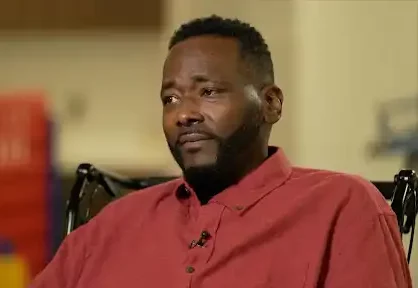
When a life-threatening moment interrupts the ordinary, it often reshapes how a person understands both life and eternity. Recently, a star from The Blind Side, Quinton Aaron, shared a powerful testimony about encountering Jesus during a near-death experience—an account that has stirred reflection among Christians and beyond.
While such experiences can be met with skepticism, they consistently invite deeper questions: What happens when the physical and spiritual seem to intersect? And how should Christians respond when stories like this surface?
A Moment Between Life and Eternity
Aaron described a critical period when he was hospitalized and placed in a coma after a severe health crisis. During that time, he recounted a vivid encounter that felt unmistakably real. Reflecting on the moment, he said, “I saw Jesus,” explaining that the experience made sense after learning he had medically “coded” multiple times.
In his account, Jesus was not distant, but personal and near. Aaron shared, “He appeared in front of me and placed his hands on my back exactly where the pain was… ‘Til this day, I can still feel his hands.” The pain, he said, disappeared instantly—an experience he believes was not just symbolic, but transformative.

For many Christians, this resonates with Psalm 34:18: “The Lord is close to the brokenhearted and saves those who are crushed in spirit.” In moments where human strength fails, faith often becomes deeply experiential.
Discerning Experience Through Scripture
Accounts like Aaron’s should be approached with both openness and discernment. Christianity is not built on personal experiences alone, but on the unchanging truth of Scripture. Yet, testimonies can serve as reminders of what the Bible has long declared—that Jesus is present, active, and compassionate.
Aaron himself interpreted the moment as more than a vision. He reflected, “It was like… you died… and God… brought me back… it feels like I was given a second chance.” This perspective aligns with the Christian understanding of grace—a life renewed not by merit, but by divine intervention.

As 2 Corinthians 5:7 teaches, “For we walk by faith, not by sight.” Even when someone claims to have “seen,” the Christian journey remains rooted in trusting God beyond what is visible. The Holy Spirit guides us to weigh such testimonies carefully, ensuring that faith remains anchored in truth.
What This Means for Everyday Faith
Beyond the extraordinary nature of the experience lies a more practical implication. Aaron shared that the encounter strengthened his faith and reshaped his sense of purpose, recognizing that there is still “more to do” in his life.
This is where the story becomes relevant to everyday Christians. Not everyone will experience a near-death vision, but every Christian is called to live with an awareness of God’s presence. Through prayer, engagement in the church, and a commitment to spiritual growth, faith becomes more than routine—it becomes relational.
Experiences like Aaron’s do not replace the gospel; they point back to it. They remind Christians that Jesus is not merely a figure in Scripture, but a living Savior who meets people even in their most vulnerable moments.
In the end, the value of such testimonies lies not in proving the supernatural, but in prompting reflection. They challenge us to examine their own faith: Is it passive, or alive? Distant, or deeply personal?
Aaron’s story may raise questions—but it also echoes a timeless truth: that God continues to reach people, often in the moments when they need Him most.
*Cover Photo/Thumbnail Photo from Jubilee Cast
RELATED ARTICLES

PUMA Launches SM Megamall Store with Interactive In-Store Games

Beijing Marriott Marquis Hotel Hosts China Open Delegation During Its Opening Weeks

Bible Verses for Overcoming Depression
Alaska Airlines and Hawaiian Airlines to introduce new chef-curated menus and premium wine program for international Suites guests