
The Day Faith Moved a Paralyzed Hand

SHARE
A closer look at how one man’s response to Jesus reflects faith, obedience, and the heart of God in the gospel story.
The story of Jesus Christ healing the man with the paralyzed hand is recorded in the Bible, including Mark 3:1–6. It takes place in a synagogue in Israel on the Sabbath, a day dedicated to rest and worship under Jewish tradition. On the surface, it is a regular gathering, but beneath it lies growing tension. Religious leaders are present, not to seek truth, but to observe Jesus closely, hoping to find grounds for accusation.
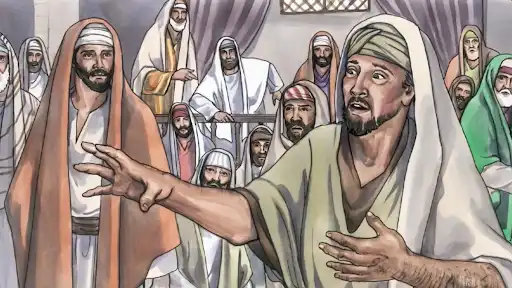
In the same setting stands a man with a withered hand—quiet, likely accustomed to being defined by limitation. Instead of ignoring him, Jesus calls him forward, shifting everyone’s attention from rule-keeping to human need. Then He confronts the leaders with a piercing question about whether it is lawful to do good or to do harm on the Sabbath, exposing the hardness in their hearts.
As written in Mark 3:5, “Then He said to the man, ‘Stretch out your hand.’ And he stretched it out, and his hand was restored as whole as the other.” In that simple act of obedience, healing takes place instantly. The moment reveals a powerful truth: God’s compassion is never limited by tradition. Jesus shows that doing good reflects the true heart of God, challenging Christians to live out a faith that is active, not merely ritualistic.
Faith Requires Courage and Action
The man with the paralyzed hand is often overlooked, yet his role is crucial. When Jesus asked him to “stretch out” his hand, it required trust. From a human perspective, the command seemed impossible—how can someone move what is paralyzed?
But faith often begins where comfort ends.
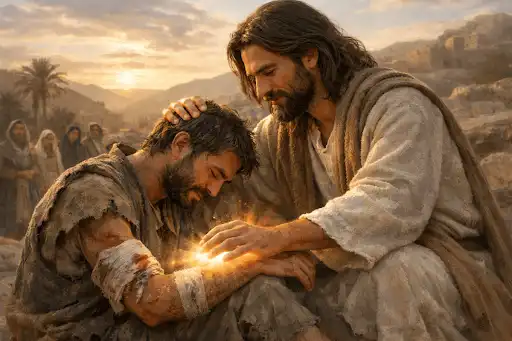
The man’s response illustrates a key truth: obedience precedes transformation. His willingness to act, even before seeing results, reflects a deeper faith in God. This speaks directly to modern Christians navigating uncertainty, whether in career, relationships, or personal struggles.
Faith is not passive. It invites participation. The gospel consistently shows that when people respond to Jesus with trust, healing both physical or spiritual follows.
God Values People Over Legalism
The reaction of the Pharisees is just as telling as the miracle itself. Rather than celebrating restoration, they focused on rule-breaking. This exposes a heart disconnected from compassion.
In Mark 3:4, it is written that, “Is it lawful on the Sabbath to do good or to do evil, to save life or to kill?” Jesus reframes the question entirely. For Him, the Sabbath was not about restriction, but restoration. This aligns with the broader message of the church today—that faith should lead to love, not judgment.
In a modern context, this lesson challenges how we represent our faith. Are actions rooted in grace and guided by the Holy Spirit, or confined by rigid expectations? True faith reflects God’s character. He is merciful, just, and life-giving.
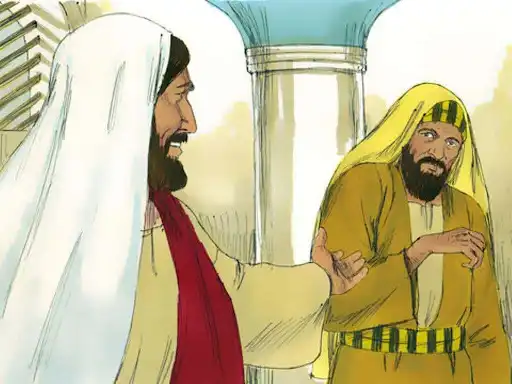
The healing of the man with the paralyzed hand is more than a miracle story. It is a call to deeper faith, courageous obedience, and compassionate living. It reminds us that God’s work often happens in unexpected ways and sometimes, at inconvenient times.
Ultimately, this passage invites Christians to trust that what feels “paralyzed” in their lives is not beyond God’s power. With faith, even the most immovable situations can be restored, pointing us toward the hope of Heaven and the ongoing work of God in our lives.
*Cover Photo/Thumbnail Photo from Answered Faith
RELATED ARTICLES

‘NBA Cares x Sands Cares Community Impact Week 2026’ Attracts Over 2,900 Participants Across Five Days

QR Ph and InstaPay payments nearly triple, but cash-on-delivery remains highest in PH

NOVI Health expands its longevity offering and grows its physician-led team

Uzbekistan Hospitality Group TEG Completes U.S. Business Combination