

Latest Posts
Why the Jews Remain God’s Chosen in the Bible

SHARE
A closer look at biblical proof that the Jews remain God’s chosen people and what this means for Christians and God’s promises today.
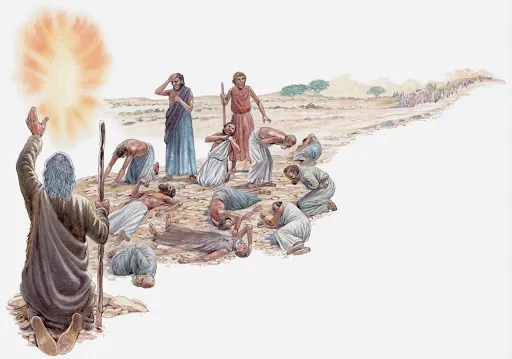
Across the pages of the Bible, one theme quietly threads its way from beginning to end: God’s unwavering commitment to His people. Long before the rise of the early church, before the message of the gospel reached distant nations, there was a promise spoken to Abraham that would shape history.
In Genesis 17:7, God declares, “I will establish my covenant as an everlasting covenant between me and you and your descendants after you…”
That single word ”everlasting” carries profound weight. It suggests something beyond human timelines, beyond political shifts or cultural change. For many Christians, this is where the understanding begins: that the Jewish people were not only chosen in the past, but remain part of God’s ongoing story.
This covenant was never presented as fleeting. Instead, it reveals a God whose faithfulness does not expire, even when human circumstances evolve.
The Tension and Clarity of the New Testament
With the coming of Jesus, the narrative of the Bible widens in a remarkable way. Salvation, once closely associated with Israel, is now extended to all people through the message of the gospel. The disciples, many of whom were Jewish, became the first messengers of this truth, traveling across regions to share God’s invitation with both Jews and Gentiles.

Still, this expansion introduces an important theological question: does inclusion mean replacement? Has God set aside His original people in favor of a broader audience?
The Apostle Paul offers a direct and compelling response in Romans 11:1–2, “Did God reject his people? By no means! … God did not reject his people, whom he foreknew.”
These words provide clarity where tension often exists. Paul emphasizes that God’s covenant with Israel remains intact. The inclusion of Gentiles is not a rejection of the Jews but a demonstration of God’s expanding mercy.
For Christians, this reinforces a deeper understanding of God’s plan—one that is not about replacing one group with another, but about fulfilling His promises while inviting all into a relationship with Him.
Faith, Fulfillment, and What It Means Today
For modern Christians, this conversation goes beyond theology, it becomes deeply personal. If God remains faithful to His promises to Israel, it reveals something foundational about His nature. He is not unpredictable or inconsistent; He is steady, trustworthy, and intentional in all He does. What He begins, He sustains.

This assurance speaks directly into the life of every Christian. The same God who established an everlasting covenant is the One who offers salvation through Jesus, the promise of Heaven, and the daily guidance of the Holy Spirit. His faithfulness in the past becomes a source of confidence for the present.
Understanding the Jews as God’s chosen people does not create separation: it provides clarity. It places the Christian faith within a broader, ongoing story that stretches across generations. The global church is not disconnected from this history but is spiritually connected to it.
Ultimately, this narrative is not about exclusion, but continuity. It points to a God who calls with purpose, remains faithful through time, and fulfills every promise, inviting all of us into a relationship marked by grace, truth, and enduring faith.
*Cover Photo/Thumbnail Photo from BibleArt.com
RELATED ARTICLES

Smarter Sports and Health on Your Wrist: HUAWEI WATCH GT 7 Series and HUAWEI WATCH D3 Now Available for Pre-Order Starting at PHP 14,999

CRUNCHYROLL EXPANDS ITS ONE PIECE CATALOG ACROSS SOUTHEAST ASIA

CRUNCHYROLL REVEALS “SEKIRO: NO DEFEAT” WILL STREAM WEEKLY AS A SERIES BEGINNING JANUARY 2027

Rolex tops Asia retail brand conviction ranking as more consumers recommend it than currently buy it